
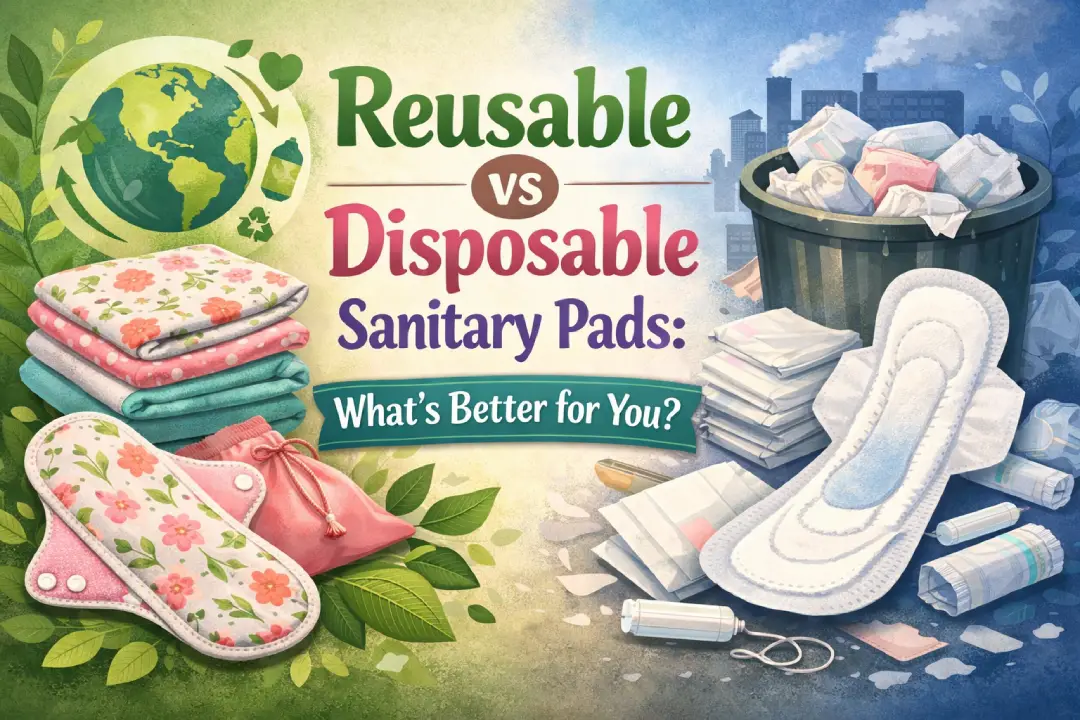
Choosing the right menstrual product is one of the most critical decisions for your health, comfort, and the environment. Among the many options, reusable and disposable sanitary pads are the most commonly used, but each has its own set of benefits and drawbacks. As we become more aware of the environmental impact of everyday products, many women are reconsidering disposable pads and seeking sustainable alternatives. But which one is really better for you and the environment?
In this guide, we’ll compare reusable and disposable sanitary pads from multiple angles, including health considerations, environmental impact, cost-effectiveness, and comfort. Let’s dive into what makes each option unique and how to make the best choice for your body and the planet.
What Are Reusable Sanitary Pads?
Reusable sanitary pads are menstrual pads made from natural, breathable materials like organic cotton, bamboo, or microfiber. These pads are designed to be washed and reused for several years, making them a more sustainable option compared to disposable products. Most reusable pads consist of a soft, absorbent core with a waterproof backing, and they come in various sizes and absorbency levels to suit different flow types.
Reusable pads are gaining popularity because they don’t end up in landfills after each use. They are also generally considered gentler on the skin, especially for those who experience allergies or irritations from synthetic materials often found in disposable pads. One key advantage of these pads is their longevity. While the initial cost may be higher, reusable pads can save money over time and are better for the environment.
What Are Disposable Sanitary Pads?
Disposable sanitary pads, on the other hand, are single-use products made from synthetic materials such as plastics, rayon, and polyester. They are designed to be thrown away after one use, making them convenient but also wasteful. These pads are commonly treated with chemicals, fragrances, and synthetic polymers to improve their absorbency and prevent leakage.
Disposable pads come in various sizes and absorbency levels, and they are often the most accessible option, available in most grocery stores and pharmacies. However, their use contributes significantly to environmental waste. Plastic components in these pads do not biodegrade easily, and the constant need to purchase new pads adds up to a lot of garbage over time.
Overview of the Types and Options Available
Both reusable and disposable pads come in different styles to suit individual needs:
- Reusable Pads: Available in various absorbency levels, from light flow pads for the end of your period to super absorbent pads for heavy flow days. They can be fastened with snaps or Velcro for a secure fit.
- Disposable Pads: Available in regular, ultra-thin, overnight, and super absorbent varieties. They are often designed with wings for added leak protection and come in individual wrappers for convenience.
Health Considerations: Which Is Better for Your Body?
Chemical Exposure in Disposable Pads
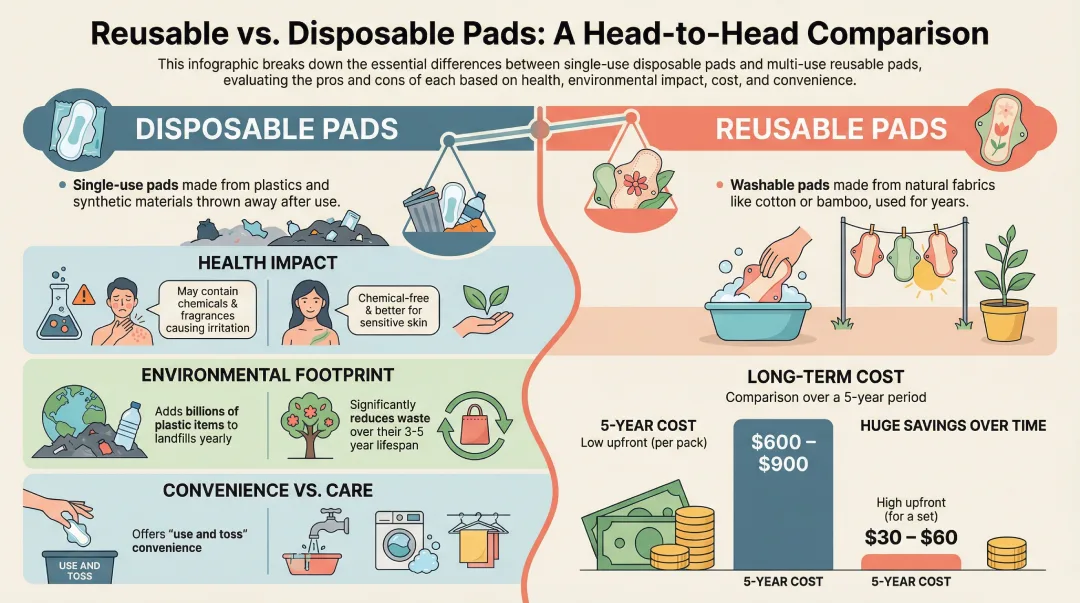
One of the main concerns with disposable sanitary pads is their potential impact on health. Many disposable pads are treated with chemicals, fragrances, and synthetic materials that can irritate the skin. Dioxins, byproducts of chlorine bleaching, are sometimes found in disposable pad materials, and long-term exposure to these chemicals may pose health risks. Women who use disposable pads regularly may be exposed to these chemicals, which can cause allergic reactions, rashes, or skin irritation. Recent studies indexed by the NIH have raised questions about the presence of VOCs and phthalates in conventional disposable pads.
Furthermore, some disposable pads contain synthetic fragrances meant to mask odor. These fragrances can be irritating to sensitive skin and may lead to vaginal infections or discomfort over time. For women with sensitive skin, the use of plastic-based pads can also cause skin irritation, as they do not allow the skin to breathe properly.
Benefits of Reusable Pads for Sensitive Skin
Reusable pads, on the other hand, are generally made from natural, breathable materials like organic cotton, which is soft and gentle on the skin. Because they are free from harsh chemicals, fragrances, and synthetic materials, they are a safer option for those with sensitive skin or allergies. Organic cotton pads, in particular, are less likely to cause irritation or allergic reactions because they don’t contain the harsh chemicals found in many disposable products. If you find that standard synthetic materials lead to rashes, exploring sanitary towels for sensitive skin can help you identify specific hypoallergenic brands and organic options.
Since reusable pads are made from natural fibers, they also allow the skin to breathe more easily. This can reduce the likelihood of rashes, chafing, and vaginal discomfort, which are common issues with disposable pads, especially when worn for long periods.
Absorbency and Comfort
When it comes to absorbency, both reusable and disposable pads can be effective, but the experience may vary based on material and design. Disposable pads are often thinner, which makes them feel more discreet and lightweight, but they may not be as breathable. On the other hand, reusable pads, especially those made from organic cotton or bamboo, offer superior breathability and are generally more comfortable, even if they are bulkier.
Comfort: Many users find reusable pads to be more comfortable for extended use. Unlike disposable pads, they tend to stay in place better because they’re made with more flexible, organic materials. The absorbency is also better for those with heavy flows, as reusable pads are designed with a thicker, more absorbent core.
Environmental Impact: A Deep Dive into Sustainability
Waste from Disposable Sanitary Pads
Disposable sanitary pads contribute to significant environmental waste. According to the Environmental Protection Agency (EPA), hygienic pads take hundreds of years to break down in landfills because of their plastic components. This means that every time you use a disposable pad, it adds to the growing problem of plastic waste in the environment. It is estimated that over 20 billion sanitary pads are used each year globally, and most end up in landfills or are incinerated.
The environmental impact doesn’t stop there. The production of disposable pads requires raw materials (like plastics and synthetic fibers), which are not renewable and often involve environmentally harmful processes. In addition, the chemical treatment used in the manufacturing process can pollute water systems and soil, further harming the environment.
Eco-Friendly Nature of Reusable Pads
Reusable pads, in contrast, are a much more sustainable option. They can be used for several years if properly cared for, significantly reducing the amount of waste generated by menstrual products. Reusable pads are typically made from organic cotton or bamboo, both of which are biodegradable and require fewer resources to produce compared to synthetic pads. Both microfiber and cotton sheets have distinct qualities that set them apart, making each suitable for different types of sleepers and environments. Even with occasional washing of reusable pads, the overall environmental impact is much lower over several years.
Reusable pads can also be washed and reused for hundreds of cycles, which reduces the overall need for single-use products. By choosing reusable pads, you are making a conscious choice to reduce landfill waste, plastic pollution, and your carbon footprint.
Life Cycle Comparison
A life cycle comparison of the two types of pads shows that reusable pads are more sustainable. Although reusable pads require an initial investment, they save significantly in the long term by reducing ongoing purchases. Here’s a breakdown of their life cycle:
- Disposable Pads: Need to be purchased monthly, leading to ongoing waste and the use of synthetic materials.
- Reusable Pads: An upfront cost for a set of pads, but they can last for several years. This dramatically reduces both environmental waste and the financial cost over time.
Cost Comparison: Which Is More Budget-Friendly?
Upfront vs Long-Term Costs: Reusable Pads
When considering the financial implications of reusable sanitary pads, it’s essential to look at both the upfront investment and the long-term savings. Reusable pads typically have a higher initial cost because they are made from high-quality materials such as organic cotton or bamboo, which can make them pricier than disposable options. However, the key benefit of reusable pads is that they are designed to last several years. A typical set of reusable pads can last for 3-5 years with proper care.
Here’s a rough breakdown of the initial cost for reusable pads:
- A set of 6-8 reusable pads can range from $30 to $60, depending on the brand and material.
- Additional accessories, such as a wet bag for storage or a pad, may cost around $10 to $20.
Although the upfront cost is higher, you save money over time by avoiding the cost of buying new pads every month. If we break this down, it works out to a few cents per use over several years.
Long-Term Savings:
If you switch to reusable pads, you avoid the ongoing monthly costs of disposable pads. Over several years, this adds up to substantial savings.
Example Calculation:
- Disposable pads cost: Around $10–$15 per month, which comes to approximately $120–$180 per year.
- Reusable pads cost: You can buy a set for $30–$60 that will last for 3-5 years, which brings the cost down to around $10–$20 per year when calculated over their lifetime.
In the long run, reusable pads are significantly more cost-effective, especially when considering that they can be reused for hundreds of cycles.
Recurring Costs of Disposable Pads
On the other hand, disposable pads are relatively inexpensive per unit but can become quite expensive over time. Since these pads are single-use, they need to be bought regularly, typically every month. For a typical user, this means spending $10 to $15 a month on sanitary pads.
Yearly Expenses:
If you use disposable pads, you’ll spend around:
- $120–$180 per year on pads, depending on the brand and frequency of usage.
- Over 5 years, this equates to around $600–$900.
While disposable pads are convenient and inexpensive upfront, their cumulative costs add up significantly over time.
Which Is More Budget-Friendly in the Long Run?
Though disposable pads might seem cheaper at first, when you factor in long-term costs, reusable pads offer much more value for money. After an initial investment of around $30–$60, you can save up to $900 over the next 5 years by using reusable pads, making them the more economical choice in the long term.
When you compare the cost per use between the two options, reusable pads are the clear winner for those looking to save money while still maintaining comfort and hygiene.
| Product Type | Initial Cost | Monthly Cost | Annual Cost | 5-Year Cost | Cost Per Use |
| Disposable Pads | Low (per pack) | $10–$15 | $120–$180 | $600–$900 | High (one-time use) |
| Reusable Pads | High (upfront) | None (except wash) | $10–$20 | $30–$60 (one-time) | Low (multi-use) |
Convenience and Practicality: Which Is Easier to Use?
Convenience of Disposable Pads
Disposable sanitary pads are designed for convenience. They are easy to use, require no maintenance, and are readily available in stores, making them the go-to option for many women. Each pad is individually wrapped, which makes them easy to carry in your bag for daily use. Simply remove a pad, stick it on, and dispose of it after use. It’s a straightforward process, and many women find it ideal for busy days or when they’re on the go.
The most significant advantage of disposable pads is their no-maintenance nature. Once you use them, you can throw them away, which adds to the convenience. Additionally, disposable pads come in various types, such as overnight pads and ultra-thin pads, allowing you to choose the right one for your flow and lifestyle.
However, the convenience of disposable pads comes with the tradeoff of generating waste and needing to repurchase them regularly. While they are easy to use, long-term waste accumulation and the cost of constantly buying new pads can be issues for those concerned with sustainability and long-term financial commitments.
The Care and Maintenance of Reusable Pads
On the flip side, reusable pads require more attention and care. While they may not be as convenient as disposable pads, their long-term benefits far outweigh the minimal effort needed to care for them. After each use, reusable pads must be washed and dried before reuse. Many women find this routine manageable, and after some practice, it becomes second nature.
Here’s a simple guide to caring for reusable pads:
- Rinse After Use: After removing the pad, rinse it with cold water to prevent staining and bacteria build-up.
- Machine Wash or Hand Wash: Wash the pads in a machine (in a laundry bag) or by hand with a mild detergent. Avoid using fabric softeners, as they can affect the absorbency.
- Drying: Hang the pads to dry, preferably in a well-ventilated area. Avoid using a dryer, as it can damage the fabric over time.
Despite the extra effort required, reusable pads are a practical option for those willing to make a small commitment to sustainability. After a few uses, washing and caring for reusable pads becomes an easy part of your menstrual routine.
Which Option is More Practical for You?
Ultimately, the convenience of disposable pads makes them appealing to those seeking a hassle-free option, especially for travel or on busy days. However, if you’re looking for a long-term solution that is better for both the environment and your wallet, reusable pads are a great choice. It’s about weighing the convenience of disposables against the long-term sustainability and cost-effectiveness of reusable pads.
Consumer Considerations: What Should You Consider Before Switching?
What to Look for in a Reusable Pad
If you’re considering making the switch to reusable pads, there are a few things to keep in mind:
- Material: Look for pads made from organic cotton, bamboo, or microfiber, which are soft, breathable, and absorbent.
- Absorbency: Choose pads that match your flow. Light flow pads will work best for the end of your period, while super absorbent pads are necessary for heavy flow days.
- Size and Fit: Make sure to choose the right size to avoid leaks. Reusable pads often come with adjustable wings to keep them in place.
- Brand Reputation: Choose a trusted brand with positive customer reviews to ensure the pads’ quality and longevity.
What to Look for in a Disposable Pad
When choosing disposable pads, consider the following:
- Absorbency Level: Choose a pad that matches your flow, such as light, regular, or super absorbent.
- Chemical-Free Options: Look for brands that offer organic cotton or fragrance-free pads to reduce irritation and exposure to harmful chemicals.
- Comfort Features: Pads with wings can provide extra leak protection, while thinner designs may offer more comfort.
- Making the Switch: Things to Keep in Mind
Switching from disposable pads to reusable pads is a personal decision. If you’re new to reusable options, start by purchasing a small set to see if they suit your needs. Once you get used to the routine of washing and storing reusable pads, you’ll find that they fit seamlessly into your daily life.
For those interested in making the switch, it’s also worth exploring other eco-friendly alternatives, such as menstrual cups or period panties.
Final Thoughts
Choosing between reusable and disposable sanitary pads ultimately comes down to what works best for your health, lifestyle, and values. Reusable pads are more cost-effective, environmentally friendly, and often healthier for your skin, while disposable pads offer more convenience and ease of use. Both options have their pros and cons, but for those looking to reduce waste and save money in the long term, reusable pads are a fantastic choice.
Take the time to consider your needs, explore different products, and make an informed decision that aligns with your lifestyle and values. Whichever option you choose, prioritize comfort, hygiene, and sustainability.