
Managing a heavy flow during your period can feel like a constant struggle, frequent pad changes, leaks, and discomfort are just a few of the challenges. Choosing the right sanitary pad is crucial, as it can significantly improve your comfort, hygiene, and confidence during heavy flow days. Whether you’re struggling with menstrual discomfort or just want to make sure you’re prepared for your heaviest days, finding the best sanitary pads for heavy flow is key. In this guide, we’ll walk you through what to look for in pads for heavy periods and share our top recommendations that provide superior absorbency, leak protection, and comfort.
What Is Considered Heavy Flow?
Heavy menstrual flow is more than just a lot of bleeding, it can be a challenge to manage and can cause significant discomfort. Heavy flow typically refers to a situation in which you lose more blood than is considered average. While every woman’s flow is different, heavy flow can be defined as:
- Soaking through a pad every hour or two.
- Needing to change pads frequently (more than 4-6 times a day).
- Excessive clotting, where blood is heavier than usual.
- Flow lasting longer than usual (e.g., more than 7 days).
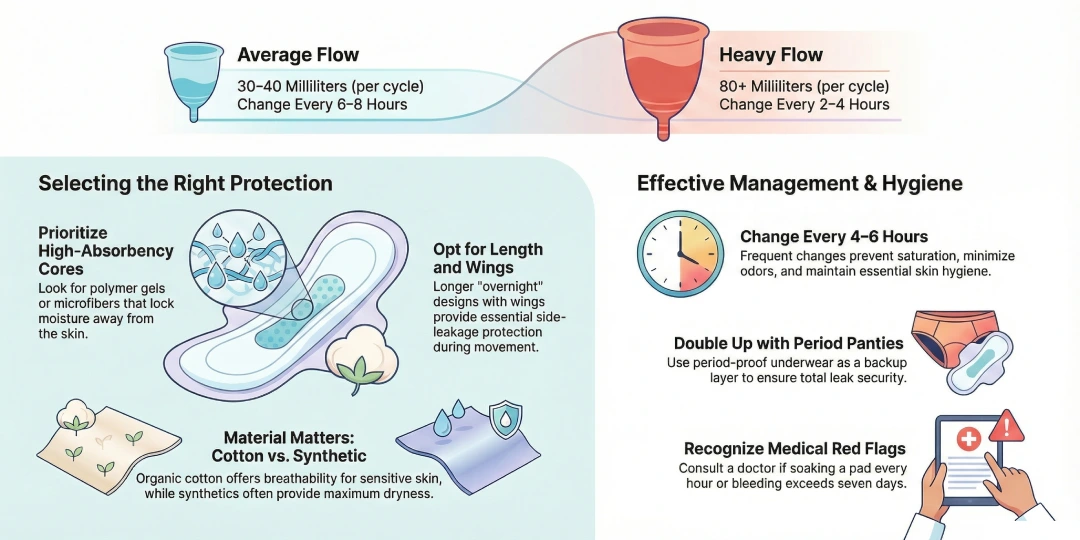
For most women, normal menstrual flow is around 30-40 milliliters of blood per cycle. Anything over 80 milliliters can be considered heavy flow, which may lead to menorrhagia (excessive bleeding). If you are experiencing these symptoms, it may be worth discussing it with your healthcare provider.
Challenges of Managing Heavy Flow
Managing heavy periods is no easy task. It often comes with several challenges:
- Leakage: It can be frustrating and stressful when pads don’t absorb the flow in time, especially during physical activities or while sleeping.
- Discomfort: Wearing pads that aren’t designed for heavy flow can result in constant pain, and skin irritation may occur if the pad becomes soaked too quickly.
- Frequent Changes: Heavy flow days mean you have to change your pads more frequently, which can be inconvenient and tiring.
On top of all that, heavy periods can cause anxiety about unexpected leaks. That’s why it’s crucial to find a sanitary pad that offers both high absorbency and secure protection. While every cycle is unique, medical standards typically define a heavy flow as losing more than 80 milliliters of blood per cycle. If you find yourself soaking through a standard pad every hour or dealing with frequent clots in menstrual blood, it is time to switch to a product specifically engineered for high-volume absorption.
When to Seek Medical Advice for Heavy Flow
While heavy flow is typical for some women, it’s important to recognize when it may indicate a health condition. Menorrhagia is a condition that causes weighty periods and can lead to anemia if left untreated. If you experience any of the following symptoms, it might be time to consult a doctor:
- Soaking through one or more pads every hour for several hours.
- Periods lasting longer than seven days.
- Severe cramps or pelvic pain.
- Fatigue or dizziness may suggest anemia.
If you’re concerned about your period flow, don’t hesitate to talk to a healthcare professional. Early diagnosis can help manage heavy periods and provide treatment if necessary.
Key Features to Look for in Sanitary Pads for Heavy Flow
Absorbency: The Most Important Factor
When it comes to sanitary pads for heavy flow, absorbency is paramount. High-absorbency pads will help you stay comfortable, dry, and protected throughout the day without the risk of leakage. Look for pads with an extra absorbent core designed for heavy periods. These pads typically feature:
- Multi-layered designs: These layers work together to trap moisture, lock it away, and ensure it doesn’t leak through.
- Super absorbent materials: Such as polymer gels or microfibers, which have an increased ability to absorb larger volumes of fluid.
- Wider absorbent areas: Ensuring that the pad captures more blood, especially around the edges, where leaks tend to occur.
For heavy flow, the key is to overestimate your needs rather than risk using a pad that might not handle the volume. Pads labeled “super” or “overnight” are typically designed with extra absorbency to cater to this need.
Length and Coverage for Full Protection
While absorbency is crucial, you also need pads that offer adequate length and coverage to prevent leaks. Longer pads or overnight pads often provide more surface area for better protection. These pads can handle heavier flow, especially when you’re lying down or sleeping. Choosing pads with wings or extra-wide designs can further enhance protection by ensuring that the pad stays securely in place, even during movement. These features help prevent side leakage, a common problem on heavy-flow days.
Wings and Leak Protection
Pads with wings provide added security by wrapping around the sides of your underwear. This ensures that the pad stays in place, no matter what activity you’re doing, and reduces the chances of side leakage. Pads with leak guards or anti-leak barriers are designed to provide extra protection, particularly at the sides and edges of the pad. This is important for heavy flow because it prevents fluid from escaping when you move or during periods of increased flow.
Material and Breathability
The material of the pad is essential, especially for comfort. Many disposable pads contain synthetic fibers that can irritate the skin or cause discomfort, especially during prolonged use. Pads made from natural materials like organic cotton are often gentler on the skin and allow for better breathability.
For women with sensitive skin or allergies, it’s crucial to choose pads made from hypoallergenic materials free of synthetic chemicals, fragrances, and dyes. Bamboo-based pads are also a good option because they are naturally antimicrobial and hypoallergenic, making them ideal for those with sensitive skin.
Odor Control Features
Heavy periods can sometimes have an unpleasant odor, and that’s when odor-control features in pads become essential. Pads with built-in antimicrobial properties or natural fragrance options (such as lavender or tea tree oil) help keep odors at bay while remaining gentle on the skin. This is especially important for heavy flow, as prolonged pad wear can lead to increased bacterial buildup, contributing to odor.
Top Recommendations for Sanitary Pads for Heavy Flow
After considering the essential features for managing heavy flow, here are some of the top pads available that offer excellent protection, comfort, and absorbency:
Always Ultra Thin Overnight Pads with Flexi-Wings
These pads are designed specifically for heavy flow and overnight use, providing maximum absorbency and leak protection. The extra-long design ensures comfort during the night, and the flexi-wings offer a secure fit, reducing the risk of leaks while you sleep. The combination of absorbency and length makes them ideal for overnight use, allowing you to rest easy without worrying about leaks. However, they are made from synthetic materials, which may not be suitable for those seeking more natural alternatives.
Rael Organic Cotton Pads
Rael pads are made from 100% organic cotton, offering a natural, gentle solution for heavy-flow days. These pads are designed to be breathable, helping you stay comfortable while providing a high level of absorbency. As a chemical-free option, they are particularly ideal for people with sensitive skin or those looking to avoid synthetic materials. However, due to their organic composition, they may require more frequent changes depending on the heaviness of your flow, so they may not be the best choice for all-day or overnight use without changing.
Lunapads Reusable Menstrual Pads
Lunapads are eco-friendly and designed for multiple uses. These reusable pads are made from soft, breathable materials that provide superior absorbency on heavier-flow days. The sustainability factor makes them a great alternative to disposable pads, as they can be used for several years with proper care. However, they do require regular washing and care to maintain their performance and longevity. For those willing to invest the time in cleaning and upkeep, Lunapads offer a more sustainable and cost-effective option in the long run. For many, the transition to sustainable options is a top priority. If you are looking to reduce waste without sacrificing performance, consider exploring eco-friendly alternatives to sanitary towels such as menstrual cups or period underwear.
Best Pads for Nighttime Use
During heavy-flow nights, you need pads specifically designed to handle overnight leakage while you sleep. Here are some of the best options:
Seventh Generation Overnight Pads
Seventh Generation pads are made with chlorine-free cotton, making them a natural option for those seeking an organic solution. These pads are designed to provide leak-proof protection and maximum comfort throughout the night. The organic cotton is breathable and gentle on the skin, reducing the risk of irritation. However, they can be a bit bulky if used during the day, making them better suited for nighttime use when comfort and leak prevention are the priority.
Always Maxi Overnight Pads
Always Maxi Overnight Pads are designed with extra absorbency and leak-proof protection, making them ideal for long nights. These pads are ultra-thin, providing comfort without compromising on security. They come in various sizes to suit different needs and can handle heavy flow, ensuring you stay dry throughout the night. The downside is that they are made from synthetic materials, which may not appeal to those seeking natural alternatives, but their reliability in preventing leaks is a significant advantage.
Best Reusable Pads for Heavy Flow
If you’re looking for a more eco-friendly option, reusable pads are a great alternative. They last for years and are better for the environment:
GladRags Heavy Flow Reusable Pads
GladRags are made from organic cotton and are specifically designed for heavy flow. These pads offer excellent absorbency and are perfect for those looking for a more sustainable option. They are soft, breathable, and cost-effective in the long term. However, they do require regular washing and maintenance, which may be a downside for individuals looking for low-maintenance options. If you are comfortable with the cleaning process, GladRags offers a durable, environmentally friendly option.
Lunapads Cotton Reusable Pads
Lunapads are designed for heavy days and are made with highly absorbent cotton. Available in a variety of sizes, these pads are soft, long-lasting, and eco-friendly. They are an excellent option for those who want to reduce waste while maintaining comfort throughout their period. The initial investment may be higher than disposable pads, but they save money over time. Like other reusable pads, Lunapads require regular washing and care, which is more effort than simply disposing of used pads.
Tips for Using Sanitary Pads for Heavy Flow Effectively
One of the biggest concerns when managing a heavy flow is leakage. Fortunately, with the right pads and a few helpful tips, you can avoid this issue and stay comfortable throughout the day. Here are a few strategies to ensure your pad stays in place and protects you from leaks:
- Choose the Right Pad Size: Ensure you use a pad designed for heavy flow. Pads labeled “super absorbent” or “overnight” are typically best for heavy days. Choose a longer or wider pad for maximum coverage, especially if you’re on the go or sleeping.
- Use Pads with Wings: Pads with wings are secure and help prevent leakage, especially at the sides. The wings wrap around your underwear, providing extra security to prevent fluid from escaping.
- Change Pads Frequently: Even with a highly absorbent pad, it’s still important to change it every 4-6 hours to ensure you don’t exceed its absorbent capacity. This will also help prevent discomfort and maintain good hygiene.
- Try Period Panties: Period underwear can be used alongside pads for extra protection or as a backup to prevent leaks on heavy days. These undergarments are designed to provide additional absorbency and can keep you feeling dry and secure.
- Check Fit and Placement: Make sure the pad is securely in place. If the pad shifts around or moves during the day, it may not provide adequate protection. Adjust the pad so it aligns properly with your body for better coverage.
How Often Should You Change Your Pad for Heavy Flow?
Changing your pad regularly is essential to maintain comfort and avoid leaks during heavy periods. For most women with heavy flow, it’s recommended to change pads every 4-6 hours. However, this can vary depending on the level of your flow and the pad’s absorbency.
- Light to Moderate Flow Days: If your flow is lighter on certain days, you may be able to go up to 8 hours without changing your pad, but this depends on the pad’s absorbency.
- Heavy Flow Days: On days when your flow is heavier, you should change your pad more frequently, about every 2-4 hours, especially if you’re experiencing clots or soaking through your pad more quickly.
How to Know When to Change Your Pad
- Wetness: If the pad feels damp or uncomfortable, it’s time to change it. Pads should be kept dry to maintain comfort and prevent irritation.
- Odor: If you start to notice an unpleasant smell, it’s a sign that your pad is saturated and needs to be replaced.
- Feeling of Fullness: If the pad starts to feel heavy or bulging, it’s likely time to change it, even if it hasn’t been 4 hours yet.
Regularly changing your pad ensures you’re protected from leaks and helps maintain good hygiene throughout the day.
Nighttime Protection for Heavy Flow
Sleeping with a heavy flow can be particularly challenging, as the risk of leaks increases when lying down. Here are some helpful tips to ensure you stay dry and comfortable overnight:
- Use Overnight Pads: Overnight pads are longer and more absorbent than regular pads. They are explicitly designed to handle the additional flow that may occur during sleep, and they offer extra coverage to reduce the risk of leaks.
- Wear Period Panties for Backup: If you’re concerned about leaks, consider wearing period underwear alongside your overnight pad for added protection. Period panties have built-in absorbency and can handle any overflow, especially when you’re asleep.
- Change Before Bed: Try to change your pad before you go to bed. This ensures that you start the night with a fresh, dry pad. If your flow is cumbersome, this can give you peace of mind for a few hours.
- Consider a Mattress Protector: If you’re worried about accidents, a mattress protector can be a great addition to your bedding. They offer an extra layer of protection to prevent any damage to your mattress if an overnight leak occurs.
By using overnight pads and period panties, you’ll reduce the risk of leaks and stay comfortable, even during the heaviest flow days.
Hygiene Tips for Managing Heavy Flow
Maintaining good hygiene during your period, especially on heavy-flow days, is especially important to reduce the risk of irritation, odor, and infections. Here are a few hygiene tips to follow:
- Change Your Pad Regularly: As mentioned, changing your pad every 4-6 hours on heavy-flow days is essential for hygiene. If you’re at work or school, it’s a good idea to keep some pads in your bag so you can change them throughout the day.
- Clean the Area Gently: When changing your pad, it’s essential to clean the vaginal area gently using water and a mild, unscented soap. Avoid using harsh soaps or products with strong fragrances, as these can irritate the sensitive skin around your genitals.
- Dispose of Pads Properly: Dispose of pads in a waste bin, not the toilet, to prevent blockages. Wrap used pads in toilet paper or their original wrapper before disposing of them for a cleaner, more discreet disposal.
- Stay Hydrated: Drinking plenty of water during your period can help maintain a healthy menstrual flow and reduce bloating. Staying hydrated can also help alleviate some of the discomfort that can accompany heavy periods.
- Choose the Right Clothes: If you’re experiencing a heavy flow, wear loose-fitting clothes to prevent irritation and keep your padin place without shifting. Tight clothing can add pressure to your pad and increase the risk of leaks.
FAQs
What’s the best pad for heavy flow overnight?
For overnight use, high-absorbency pads are recommended, such as Always Overnight Pads or Seventh Generation Overnight Pads. These pads offer extra length, absorbency, and leak protection, making them ideal for managing heavy flow while you sleep.
How can I stop leaking during heavy periods?
To stop leaks, ensure you’re using the right size and absorbency pad for your flow. Pads with wings and extra coverage can help prevent leaks. Additionally, period panties can provide backup protection and ensure extra security throughout the day.
Can I use regular pads for heavy flow?
While it’s possible to use regular pads, they are typically not designed to handle heavy flow. It’s better to use super-absorbent or overnight pads on heavy-flow days to ensure maximum protection and comfort.
Are reusable pads effective for heavy flow?
Yes, reusable pads are effective for heavy flow when designed with high-absorbency materials such as organic cotton or bamboo. They can be a great eco-friendly option and can be used for multiple cycles.
How often should I change my pad during heavy flow?
You should change your pad every 4-6 hours on heavy-flow days. If your flow is hefty, you may need to change it more frequently, especially if you feel the pad is full or damp.
Final Thoughts
Managing heavy flow can be challenging, but with the right sanitary pad, you can stay comfortable and protected. The key is to choose pads with high absorbency, extra length, and leak protection to prevent discomfort and maintain hygiene. Whether you opt for disposable pads, reusable pads, or period panties, finding the right product for your needs will make your heavy flow days more manageable and stress-free. By following the hygiene tips and product recommendations outlined in this guide, you’ll be able to confidently navigate your period without worrying about leaks, discomfort, or inconvenience.