
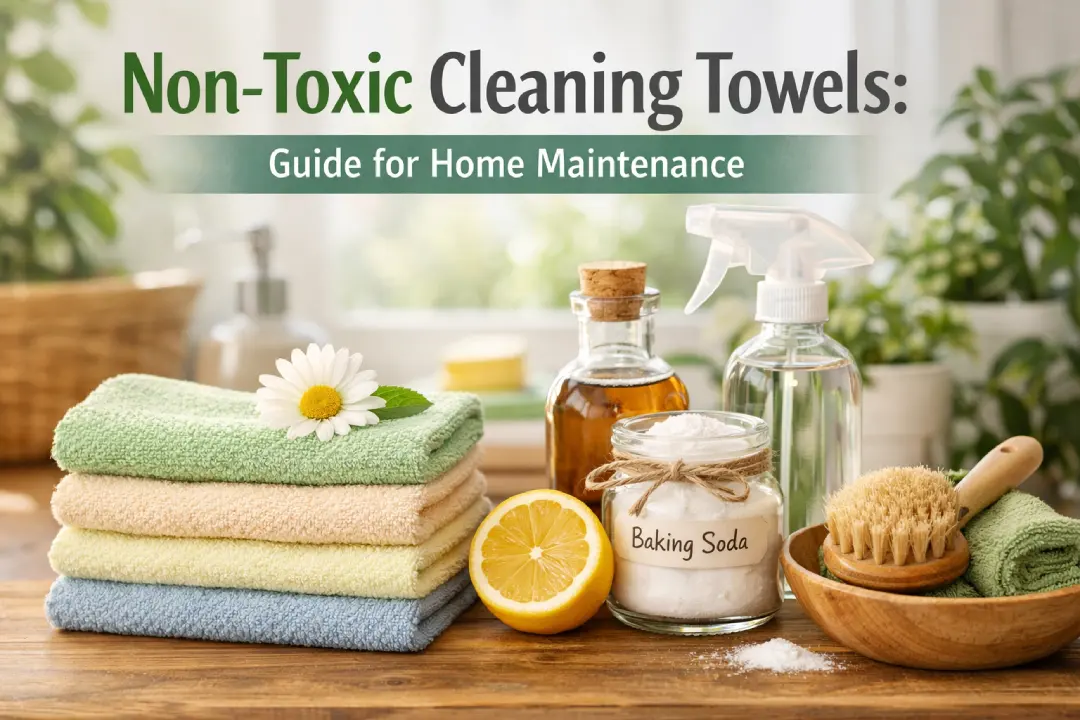
As we become more conscious about the products we use, the move toward safer, more eco-friendly alternatives in our homes is on the rise. Among these products, non-toxic cleaning towels are emerging as a game-changer for daily use. Not only do they help reduce exposure to harmful chemicals, but they also offer a more sustainable and effective way to keep your home clean. If you’ve been using traditional cleaning cloths and towels that are full of chemicals or synthetics, it may be time to reconsider. In this article, we’ll explore why non-toxic cleaning towels are becoming a must-have in every household.
What Are Non-Toxic Cleaning Towels?
Non-toxic cleaning towels are cloths designed for household cleaning without harmful chemicals, dyes, or synthetic fragrances. Typically made from natural materials like organic cotton, bamboo, or microfiber, these towels provide a safe, effective, and eco-friendly alternative to traditional cleaning cloths.
Traditional cleaning towels are often treated with harsh chemicals that can irritate the skin, cause allergic reactions, and contribute to harmful indoor air quality. On the other hand, non-toxic towels are free from these chemicals, ensuring a safer environment for both humans and pets.
Popular Materials in Non-Toxic Cleaning Towels:
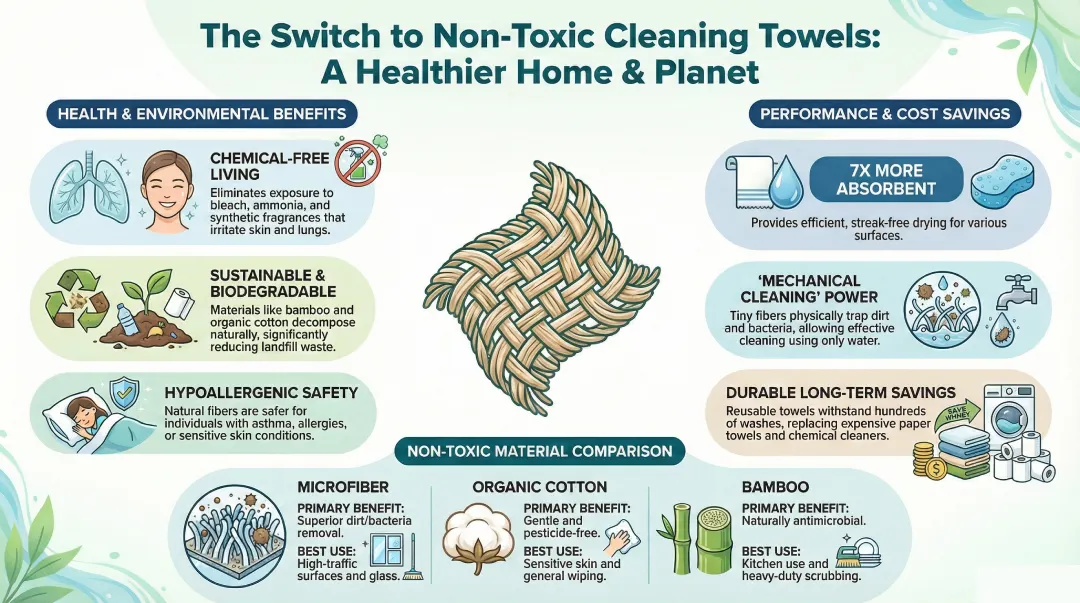
- Microfiber: This material is made from synthetic fibers and is typically free of harmful chemicals, known for its high absorbency and superior cleaning power.
- Organic Cotton: Grown without pesticides or chemical fertilizers, organic cotton is gentle on the skin and the environment.
- Bamboo: Naturally antimicrobial, bamboo towels are not only non-toxic but also biodegradable and highly durable.
Key Features of Non-Toxic Cleaning Towels
What makes non-toxic cleaning towels stand out is their unique features:
Chemical-Free Composition: Free from bleach, dyes, and harmful additives that could irritate sensitive skin.
- Eco-Friendly: Many of these towels are made from renewable resources such as bamboo or organic cotton, which have a lower environmental impact than conventional synthetic fabrics.
- Reusable and Durable: Non-toxic towels are designed to last longer, reducing waste compared to disposable options like paper towels.
- Hypoallergenic: Non-toxic towels are an excellent choice for people with allergies or skin sensitivities, as they do not contain irritants or synthetic fragrances.
In essence, non-toxic cleaning towels offer an alternative that reduces chemical exposure while improving your cleaning routine. They’re better for both your health and the planet, making them a wise choice for every home.
Why Are Non-Toxic Cleaning Towels Better for Your Health?
Chemical-Free Cleaning
Many conventional cleaning towels are treated with a variety of chemicals designed to enhance their cleaning power, such as bleach, ammonia, and synthetic fragrances. These chemicals are effective at cleaning, but they also pose significant health risks, particularly when used frequently in indoor environments. Continuous exposure to these harsh chemicals can lead to skin irritation, respiratory issues, and even long-term health problems.
By switching to non-toxic cleaning towels, you avoid these chemicals entirely. These towels are free from fragrances, dyes, and harsh additives, ensuring that the only thing you’re bringing into your home is clean surfaces. Non-toxic towels provide a gentler way to clean, making them especially important for households with young children, pets, or anyone with allergies or sensitivities.
Benefits for Sensitive Skin
People with sensitive skin often struggle with irritation from traditional cleaning products. The chemicals in synthetic towels can cause itching, rashes, and redness, especially when they come into prolonged contact with your skin. Non-toxic towels, particularly those made from organic cotton or bamboo, are naturally hypoallergenic and gentle on the skin. This makes them a great option for anyone prone to skin conditions like eczema or dermatitis.
Safe for Respiratory Health
Harsh chemicals in cleaning towels can also contribute to poor indoor air quality. As towels become damp and release chemical fumes, they can negatively impact air quality, especially in poorly ventilated rooms. Non-toxic towels, on the other hand, don’t emit harmful fumes and are a much safer choice for maintaining healthy indoor air.
In households with asthma or other respiratory issues, the switch to non-toxic cleaning towels can make a noticeable difference in comfort and health.
Environmental Impact of Traditional vs. Non-Toxic Towels
Sustainability of Non-Toxic Cleaning Towels
One of the most compelling reasons to make the switch to non-toxic cleaning towels is their environmental benefits. Traditional cleaning towels, especially those made from synthetic fibers, contribute to pollution and landfill waste. These towels often contain harmful chemicals that can leach into water systems during washing, affecting both aquatic life and human health.
On the other hand, non-toxic towels are made from natural, biodegradable materials like organic cotton, bamboo, and hemp. These materials decompose naturally and have a significantly lower environmental footprint. Choosing these products helps reduce your reliance on single-use plastic and synthetic chemicals, making them an eco-friendly option.
- Biodegradable Materials: Non-toxic towels made from organic cotton or bamboo break down naturally, unlike synthetic towels that can take years to decompose.
- Less Water and Chemical Usage: Organic cotton is grown with fewer pesticides, and bamboo requires no fertilizers or pesticides, making these towels less harmful to the environment during production.
Waste Reduction & Reusability
In addition to being biodegradable, non-toxic cleaning towels are reusable. While paper towels are often used once and discarded, leading to massive amounts of waste, non-toxic towels can be washed and reused many times. This not only reduces waste but also makes non-toxic towels a more cost-effective and sustainable option in the long run.
To further promote sustainability, many non-toxic towels are made from microfiber, which is durable and long-lasting, requiring fewer replacements than traditional towels. The most effective ways to wash and maintain a microfiber towel. Microfiber towels are designed to clean effectively with just water, eliminating the need for chemical cleaning agents and reducing the environmental burden associated with synthetic products.
Comparison to Conventional Towels
Traditional cleaning towels often contain synthetic fibers, which do not break down easily. These towels contribute to environmental pollution, particularly when they are disposed of after use. Additionally, chemicals in many traditional towels can leach into the water supply during washing, causing long-term harm to aquatic life and ecosystems.
When you use non-toxic towels, you contribute to a healthier environment, reduce your personal carbon footprint, and help protect the planet for future generations.
How Non-Toxic Towels Enhance Cleaning Performance
Microfiber Technology: The Secret to Superior Cleaning
When it comes to cleaning effectiveness, microfiber towels are among the best-performing non-toxic options available. Unlike traditional cotton towels, microfiber is made of ultra-fine fibers that are much thinner than human hair. This allows the material to trap dirt, dust, bacteria, and other particles more efficiently, making it highly effective for cleaning surfaces without the need for chemical cleaning agents.
Microfiber towels work through mechanical cleaning; the tiny fibers physically grab onto dirt particles and pull them away from surfaces. This means that you can clean your home with just water, eliminating the need for harsh chemicals and toxic cleaners. For those who want a deep, chemical-free clean, microfiber towels are an excellent choice. Plus, they can be used repeatedly without losing their cleaning effectiveness, making them highly durable.
Benefits of Microfiber Towels:
- Superior Dirt Removal: Microfiber can capture dirt and bacteria without the need for chemical products.
- No Streaks or Lint: Unlike cotton towels, microfiber doesn’t leave streaks or lint behind on surfaces.
- Highly Absorbent: Microfiber towels can hold up to 7 times their weight in water, making them excellent for cleaning and drying.
Because of their ability to trap dirt and bacteria, microfiber towels not only help with general cleaning but also help keep your home free of harmful germs and allergens without using toxic disinfectants. Because non-toxic towels are highly absorbent, they can sometimes trap moisture; if yours develop an odor, follow these steps on how to get musty smells out of towels using natural solutions like vinegar and baking soda.
Absorbency and Durability
Non-toxic towels are designed to be highly absorbent, ensuring they perform well in various cleaning tasks. Whether you’re wiping down countertops, drying dishes, or cleaning windows, non-toxic towels made from organic cotton or microfiber can absorb moisture effectively. The more absorbent a towel is, the less time you’ll spend wiping and drying, allowing you to finish your cleaning tasks faster.
In terms of durability, non-toxic towels, especially microfiber and bamboo towels, are incredibly long-lasting. They don’t wear down quickly after repeated use or washing, unlike traditional towels that lose their effectiveness over time. This durability makes them a cost-effective investment, as you’ll need to replace them less frequently than conventional cleaning cloths.
Benefits of High Absorbency and Durability:
- Quick and Effective Drying: Highly absorbent towels speed up and improve the efficiency of drying surfaces.
- Lasts Longer: Durable towels can withstand multiple washes, saving you money in the long run.
- Cost-Effective: With longer lifespan, non-toxic towels are an economical choice when compared to disposable options like paper towels.
Whether you’re cleaning up spills or drying dishes, the durability and high absorbency of non-toxic towels ensure they are up to the task, reducing the need for constant replacements.
Multi-Purpose Cleaning Uses
One of the best aspects of non-toxic cleaning towels is their versatility. They can be used for a variety of cleaning tasks around the house, making them a one-stop solution for all your cleaning needs. Here are just a few areas where non-toxic towels excel:
- Kitchen: Wipe down countertops, clean dishes, and sanitize surfaces without using harmful chemical sprays.
- Bathroom: Clean mirrors, countertops, and sinks without streaking or leaving lint behind.
- Living Areas: Use them to dust and wipe down furniture, electronics, and windows with ease.
- Car Cleaning: Microfiber towels can even be used to clean the interior of your car, removing dust, dirt, and even fingerprints from the dashboard and seats.
Since non-toxic towels don’t require any chemical agents to get the job done, they are perfect for all-around use and safe in any area of your home, helping keep your family exposed to fewer toxins and allergens.
The Cost-Effectiveness of Non-Toxic Towels
Upfront Cost vs. Long-Term Savings
The initial cost of non-toxic cleaning towels may be higher than traditional cleaning towels or disposable paper towels, but the long-term savings far outweigh the initial investment. While conventional cleaning products like paper towels are used once and thrown away, non-toxic towels are reusable, meaning you can clean with them for months or even years.
One of the key advantages of non-toxic towels is that they are designed to last. Microfiber towels, for instance, are incredibly durable and can be washed and reused hundreds of times before showing signs of wear. Over time, this durability leads to significant savings, as you won’t need to buy new towels frequently.
In addition to durability, non-toxic towels also reduce your need to purchase additional cleaning products. By relying on water and microfiber towels, you eliminate the need for chemical cleaners, which can be expensive and potentially harmful to your health and the environment.
Benefits of Non-Toxic Towels in Cost Savings:
- Fewer Replacements: High durability means fewer replacements, saving you money.
- No Need for Cleaning Products: Non-toxic towels work effectively with just water, so you save money on toxic cleaning products.
- Long-Term Investment: While the upfront cost may be higher, non-toxic towels are a cost-effective solution over time due to their longevity.
By switching to non-toxic towels, you’ll see a noticeable reduction in your long-term cleaning costs, while benefiting your health and the environment.
Avoiding Harmful Chemicals Saves Money
Not only do non-toxic towels save you money on replacements, but they also help you avoid the cost of chemical cleaning products. Traditional cleaning products can be expensive, and many require frequent purchases to maintain your cleaning routine. Moreover, chemical cleaners are often sold in large quantities, which means you may end up purchasing more than you actually need.
By switching to non-toxic towels, you eliminate the need for toxic cleaners. Microfiber towels, for example, can clean effectively without any chemicals, which means you save money on purchasing cleaners. Plus, you avoid the hidden costs associated with chemical exposure, such as potential skin issues or respiratory problems that can require medical attention.
Savings on Chemical Products:
- No Need for Disinfectants: Non-toxic towels can remove germs and bacteria without harsh disinfectants.
- Fewer Household Products: Reduce your reliance on various cleaning agents, cutting down on overall spending.
- Health Savings: Avoid medical costs associated with chemical exposure, including skin irritation and respiratory issues.
Switching to non-toxic cleaning towels offers both immediate and long-term savings, all while making your home a safer and healthier place.
How to Choose the Best Non-Toxic Cleaning Towels for Your Home
When choosing non-toxic cleaning towels, there are several factors to consider to ensure you select the best ones for your needs. Here’s a breakdown of what to look for:
- Material: Consider whether you prefer organic cotton, bamboo, or microfiber. Organic cotton is ideal for sensitive skin, while bamboo offers natural antimicrobial properties. Microfiber towels are highly effective at cleaning without chemicals.
- Absorbency: Depending on your cleaning tasks, select towels with higher absorbency for tasks like drying dishes or wiping down countertops. Microfiber towels generally have superior absorbency.
- Durability: Look for towels that can withstand multiple washes. Some towels, like microfiber, are built for longevity and can last for years without losing their effectiveness.
- Size: Choose towels in a variety of sizes to match different cleaning tasks. Larger towels are perfect for cleaning floors, while smaller ones are ideal for wiping down surfaces or dusting.
When shopping for organic cotton, always look for the GOTS certification to ensure the fabric was produced without toxic pesticides or dyes
Popular Brands and Products
Several brands specialize in non-toxic cleaning towels. Some of the top choices include:
- E-Cloth: Known for their microfiber towels, these are highly absorbent and durable, making them an excellent option for chemical-free cleaning.
- Bambooee: A brand offering bamboo-based towels that are eco-friendly, antimicrobial, and reusable.
- Shammy Cloth: These towels offer a versatile, eco-friendly alternative made from organic materials.
When selecting a brand, always consider the material, cleaning effectiveness, and durability to ensure you’re getting the most value for your investment.
Maintenance Tips
To extend the life of your non-toxic towels:
- Wash regularly: Clean towels frequently to maintain their performance, especially microfiber towels, which trap dust and dirt. To maintain the ‘mechanical cleaning’ power of your cloths, it is vital to learn how to clean towels without using heat or softeners that can melt the delicate fibers.
- Avoid fabric softeners: Fabric softeners can reduce towel absorbency, especially in microfiber towels.
- Line-dry when possible: Air-drying helps maintain the towel’s integrity and reduces the wear-and-tear of the dryer.
By following these maintenance tips, you can get the most out of your non-toxic towels and enjoy their benefits for years to come.
Final Thoughts on Sustainability and Health
By choosing non-toxic cleaning towels, you’re making a positive impact on both your health and the environment. Not only do these towels provide a safer and more efficient way to clean your home, but they also align with the growing movement toward sustainability and eco-conscious living. Switching to non-toxic alternatives in your cleaning routine is a simple yet effective way to take responsibility for your health and the planet.