
For many people, tampons are a go-to menstrual product for convenience, comfort, and protection. However, if you’re new to using them or still trying to find the right size for your flow, how much blood does a tampon actually hold? Understanding tampon absorbency is crucial in choosing the right product to prevent leaks, enhance comfort, and ensure safety during your period.
In this article, we’ll dive into the details of tampon absorbency, how much blood different tampon sizes can hold, and how to pick the best tampon based on your flow. We’ll also address essential safety tips and frequently asked questions about tampons.
What is Tampon Absorbency?
Tampon absorbency refers to the amount of menstrual fluid a tampon can hold before it becomes saturated. The absorbency of tampons is measured in milliliters (mL) and is typically categorized by size. These categories, light, regular, super, and super plus, help guide users in choosing the right tampon based on their flow.
Each size is designed to accommodate different flow levels throughout the menstrual cycle, ensuring that you stay protected while remaining comfortable. The key to using tampons effectively lies in understanding how much fluid your tampon can hold and choosing one that matches the heaviness of your flow.
Different Tampon Sizes and What They Mean
Tampons come in a range of sizes designed to accommodate varying flow levels. Here’s a breakdown of each size and what it means for tampon absorbency:
- Light Tampons: These tampons are designed for light flow days, such as the beginning or end of your period. They absorb around 6-9 mL of menstrual fluid.
- Regular Tampons: Ideal for a moderate flow, regular tampons absorb about 9-12 mL of blood. This size works well for the mid-cycle days when your period is lighter but still needs some absorbency.
- Super Tampons: These tampons are best for heavier flow days, as they absorb 12-15 mL of fluid. You may use these on the heaviest days of your period, especially in the morning when your flow is often at its peak.
- Super Plus Tampons: Designed for the heaviest flow days, super plus tampons hold 18-20 mL of menstrual blood. These tampons are ideal for overnight use or for days with significant flow.
Understanding these sizes helps you avoid overflow or discomfort during your period, making it easier to manage your menstrual cycle confidently.
How Much Blood Does a Tampon Hold?
The amount of blood a tampon can hold depends directly on its absorbency level. The following table summarizes the absorbency levels and the approximate amount of blood each size can handle:
| Tampon Size | Absorbency | Blood Volume (mL) |
| Light | For light flow days | 6–9 mL |
| Regular | For moderate flow days | 9–12 mL |
| Super | For heavier flow days | 12–15 mL |
| Super Plus | For hefty flow days | 18–20 mL |
As you can see, the more absorbent the tampon, the more fluid it can hold. This sizing system ensures that you can find the tampon that best suits your flow on any given day of your cycle.
Factors That Affect Tampon Absorbency
Several factors can influence the absorbency of your tampon. These include:
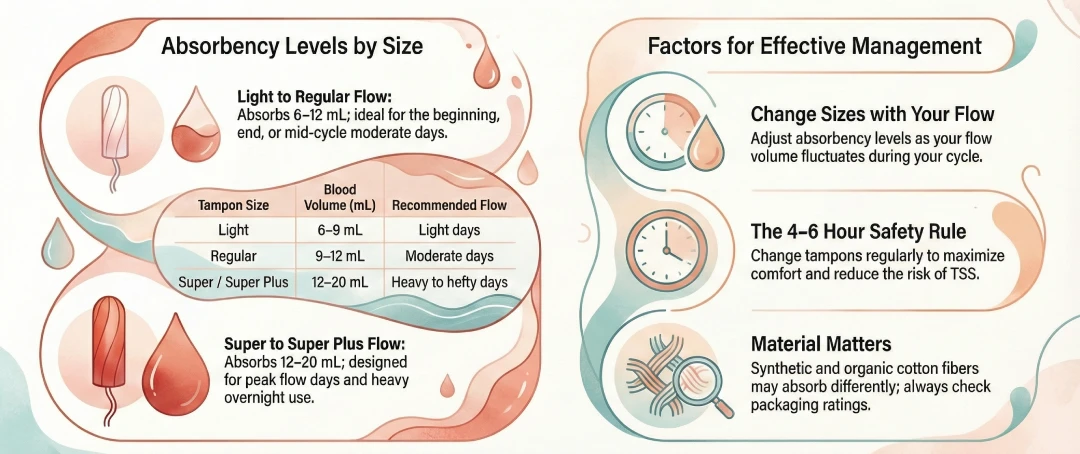
- Flow strength: Your menstrual flow varies throughout the cycle, so you may need to change tampon sizes from light to regular, super, or super plus depending on the volume of menstrual blood.
- Tampon material: Tampons made from synthetic fibers may absorb differently from those made from organic cotton or other natural materials. Always check for the absorbency rating on the product packaging.
- Wear time: The longer you wear a tampon, the more fluid it will absorb. However, it’s essential to change your tampon regularly (at least every 4–6 hours) to avoid the risk of Toxic Shock Syndrome (TSS).
By understanding these factors, you can better match your tampon to your period flow, preventing leaks and maximizing comfort.
What Happens When a Tampon Reaches Its Maximum Absorbency?
When a tampon reaches its maximum absorbency, it can no longer absorb additional blood, leading to leakage. A tampon that is too full may also cause discomfort. It’s essential to change your tampon regularly to avoid this.
For example, a super or super plus tampon might be sufficient for heavy flow, but leaving it in for too long can lead to leaks or even vaginal irritation. The absorbency rating is a guideline, but you should always listen to your body and adjust as needed.
How to Choose the Right Tampon for Your Flow
Understanding your menstrual flow is key to choosing the right tampon size. Here’s a simple guide for picking the right tampon based on your flow:
- Light Flow: Use light tampons or liners during the beginning or end of your period. These are great for spotting or very light flow.
- Moderate Flow: For mid-cycle days when your flow is moderate, regular tampons provide adequate absorbency without the risk of overuse.
- Heavy Flow: On your heaviest days, super or super plus tampons will provide the protection you need, helping you stay confident and leak-free.
- Very Heavy Flow: For overnight use or hefty days, super plus tampons are ideal.
Choosing the right size tampon can help you avoid leaks, discomfort, and unnecessary changes, making your period management easier and more comfortable.
Signs You’re Using the Wrong Tampon Size
If your tampon is not providing adequate absorbency, you may experience:
- Leaks: If your tampon is too small for your flow, it will become saturated too quickly, leading to leaks.
- Discomfort: If a tampon is too large, it can cause pain, particularly on light-flow days.
- Odor: An over-saturated tampon can produce a strong odor, indicating it needs to be changed.
If you’re noticing any of these symptoms, it may be time to adjust your tampon size to match your flow. Remember, the goal is to use a tampon that absorbs the right amount of fluid without causing discomfort or leaks.
How to Adjust Your Tampon Size Throughout Your Cycle
Your flow isn’t consistent throughout your period. It typically starts light, gets heavier in the middle, and then becomes lighter at the end. That’s why it’s essential to adjust your tampon size as needed:
- Start with a smaller size: On lighter days, use a light or regular tampon.
- Switch to larger sizes: As your flow increases, move up to a super or super plus tampon.
- Switch back to a smaller size: As your flow lightens, return to a smaller tampon to avoid discomfort.
Changing tampon sizes based on the flow can help you avoid leaks and ensure that you’re always comfortable.
Safety Considerations When Using Tampons
The Risks of Overusing Tampons
Although tampons are convenient, it’s essential to use them correctly and safely. Overusing tampons, by leaving them in for longer than the recommended time or using a size that’s too absorbent for your flow, can pose health risks. One of the most serious risks associated with tampon use is Toxic Shock Syndrome (TSS), a rare but potentially fatal condition caused by bacterial infection.
To reduce the risk of TSS and other complications, follow these safety guidelines:
- Change tampons regularly: It’s essential to change your tampon every 4-6 hours. Leaving a tampon in for longer than that can increase your risk of infection and TSS.
- Avoid overnight tampon use: While tampons are great for daytime use, it’s safer to use pads or menstrual cups overnight, as they don’t carry the same risk of TSS. If you prefer to use a tampon overnight, ensure you are using one that is appropriately sized for your flow and remember to change it before 8 hours.
- Use the correct size: Using a super plus tampon when your flow is light can absorb more blood than necessary, leading to irritation or discomfort. Conversely, using a light tampon on heavy-flow days may not provide sufficient protection, leading to leaks.
By following these guidelines and using tampons safely, you can minimize risks and stay comfortable throughout your period.
How Often Should You Change Your Tampon?
Changing your tampon regularly is key to staying safe and comfortable. The general recommendation is to change your tampon every 4-6 hours, depending on your flow. This ensures that your tampon remains effective without becoming saturated, which reduces the risk of leaks and odors. If you have a heavy flow, you may need to change your tampon more frequently, perhaps every 2-4 hours. You should also avoid wearing a tampon for longer than 8 hours to reduce the risk of Toxic Shock Syndrome (TSS). If you find that your tampon is saturated after 4-6 hours, switch to a larger size.
Conclusion: Finding the Right Tampon for Your Flow and Comfort
Choosing the right tampon size for your menstrual flow is essential to ensuring comfort, safety, and protection throughout your period. By understanding how much blood a tampon holds and adjusting its size to match your cycle flow, you can prevent discomfort, leaks, and irritation. Remember, using a tampon with the correct absorbency for your flow is not just about comfort; it’s also about safety.
Following recommended guidelines for tampon use, such as changing them every 4-6 hours and using the correct size, will help you avoid risks like Toxic Shock Syndrome (TSS) and keep you feeling fresh and confident throughout your period. By listening to your body and paying attention to your flow, you can easily determine which size tampon works best for you on any given day. Whether you’re using light tampons for the beginning of your period or super plus tampons for heavy days, proper tampon use ensures a smooth, worry-free period experience.
Frequently Asked Questions
1. How much blood can a regular tampon hold?
A regular tampon typically holds 9-12 mL of menstrual blood. This absorbency is ideal for moderate-flow days and provides sufficient protection without discomfort.
2. Can I leave a tampon in for 12 hours?
No, it’s not safe to leave a tampon in for 12 hours. The general recommendation is to change your tampon every 4–6 hours to prevent the risk of Toxic Shock Syndrome (TSS) and discomfort. If you have a heavy flow, you may need to change your tampon more frequently.
3. How do I know which tampon size to use?
Choose your tampon size based on your flow:
- Light flow: Use light tampons.
- Moderate flow: Use regular tampons.
- Heavy flow: Use super or super plus tampons.
Adjust the size as your flow changes throughout your period.
4. What happens if I use the wrong tampon size?
Using the wrong tampon size can cause discomfort, leaks, or even odor. A tampon that’s too small for your flow may become saturated too quickly, causing leaks. On the other hand, a tampon that’s too large may cause irritation or discomfort. Using the correct size based on your flow ensures comfort and protection.
5. Is it okay to use a tampon for light flow days?
Yes, it’s completely fine to use a light tampon for light flow days, particularly at the beginning or end of your period when your flow is minimal. For lighter days, you can also use pantyliners or menstrual cups, depending on your preference.